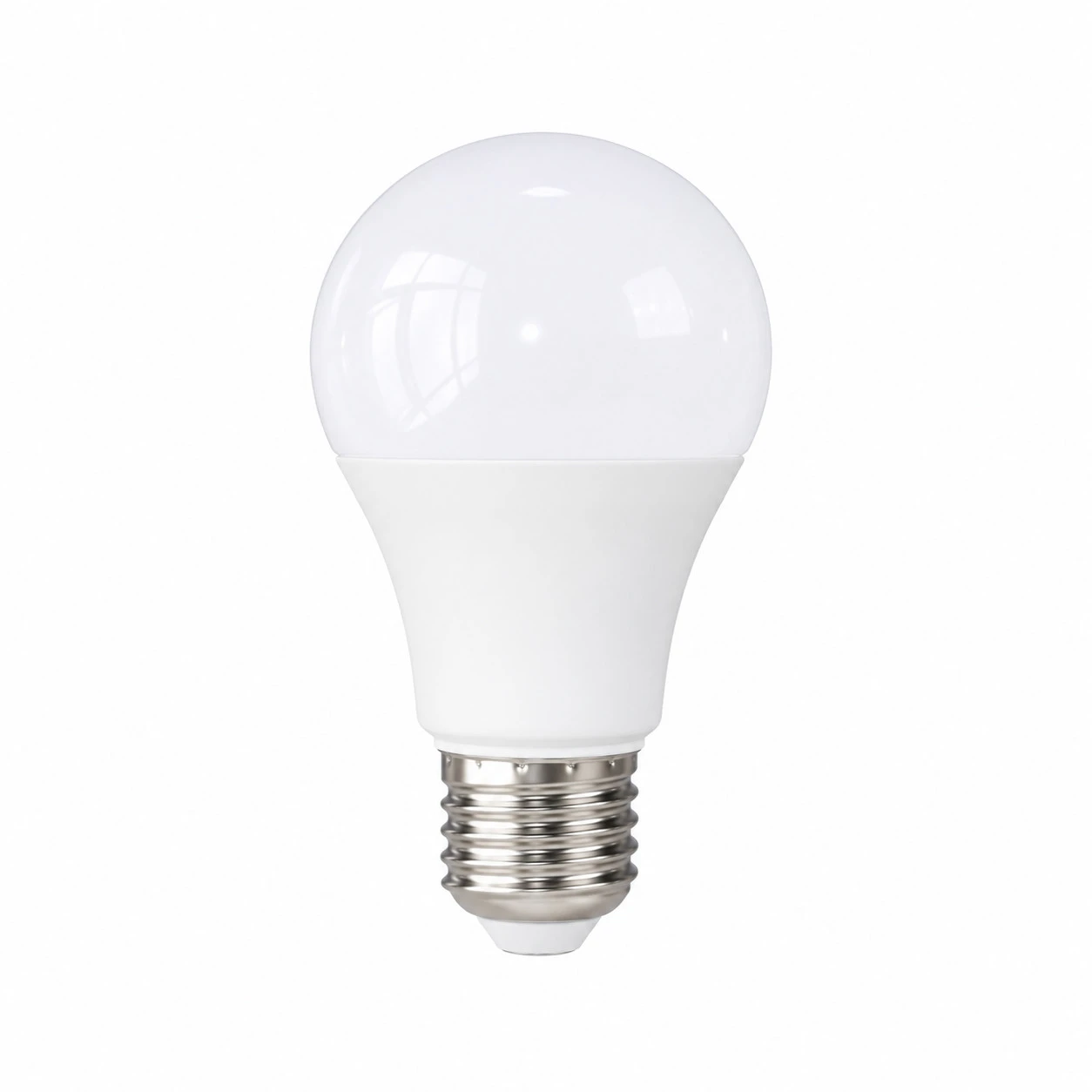
Advantages of LED Bulbs
Apr 17, 2026
Leave a message
1. Convenience
They can directly replace existing energy-saving lamps and ordinary light bulbs with the same E27, E14, GU10, and B22 interfaces. No modifications are required, and no technicians or professionals are needed. By carefully reading our instructions, you can easily switch from ordinary lighting to LED lighting yourself.
2. Safety
Ordinary energy-saving lamps operate at temperatures around 60-80℃, and ordinary incandescent lamps are even hotter (80-120℃). Accidental contact can cause burns.
LED bulbs use LEDs as the light source, coupled with a professional heat dissipation structure, resulting in a very low operating temperature (40-60℃). Even holding them in your hand will not cause burns.
Energy-saving lamps and ordinary light bulbs are made of glass, which is easily broken upon impact with hard objects, causing permanent damage and rendering them unusable. Accidental cuts from the glass are also a risk. The bulb uses a professionally designed shell, made of PC/acrylic die-cast material. The LED light source uses a shock-resistant and drop-resistant special material (the lens uses the most advanced one-piece molded soft lens technology), and the lampshade is made of acrylic material, so even if broken, it is not easy to cause cuts.
3. Energy Efficiency
Ordinary light bulbs range in wattage from 20W to 100W, while energy-saving lamps range in wattage from 5W to 65W. Using LEDs as the light source, the bulb only requires 0.8W-12W to replace 15W-100W ordinary light bulbs and 5W-50W energy-saving lamps. Therefore, the power ratio of LED bulbs to ordinary light bulbs and energy-saving lamps can reach 1:10.
Ordinary light bulbs and energy-saving lamps operate at very high temperatures (80-120℃), and the spectrum of energy-saving lamps contains IR (infrared) radiation, which is even higher in ordinary light bulbs. Extensive use will significantly increase the ambient temperature, especially in summer, significantly increasing the workload and time required for cooling equipment, ultimately resulting in increased power consumption. The bulb uses LEDs as its light source. LEDs emit no IR (infrared) radiation in their spectrum, and the overall structure employs a professionally designed heat dissipation system. Under normal operation, the temperature is only 40-60℃, far lower than that of ordinary bulbs and energy-saving lamps, even with large-scale use. This significantly reduces the workload and time required for cooling equipment in summer. Combined with the difference in power consumption (1:10), the result is a relative reduction in electricity consumption and cost savings, ultimately demonstrating the bulb's energy-saving properties.
4. Environmental Friendliness
Ordinary bulbs and energy-saving lamps produce large amounts of IR (infrared) and UV (ultraviolet) radiation during operation. Furthermore, the bulbs are filled with inert gas, which pollutes the environment with mercury and other harmful gases and substances during production and disposal. Even pulverization can have a certain impact on the environment.
The bulb uses LEDs as its light source, which emit no IR (infrared) or UV (ultraviolet) radiation. Moreover, the LEDs used in this product do not contain any filling gas and do not pulverize, thus having no adverse impact on the environment. This demonstrates its environmental friendliness. 5. Health Benefits
Ordinary light bulbs and energy-saving lamps emit IR (infrared) and UV (ultraviolet) radiation during operation, which can have some impact on health in certain applications. For example:
5.1 IR radiation can shorten the shelf life of food (especially meat, sushi, etc.), thus affecting its nutritional value.
5.2 UV radiation, with prolonged exposure to light sources containing its components, can cause items such as clothing, pearls, watch surfaces, handicrafts, and paintings to turn white.
Bullets, because their operating spectrum does not emit IR (infrared) or UV (ultraviolet) radiation, have no adverse health effects during use.
6. Short Response Time
Ordinary energy-saving lamps respond to changes in ambient temperature. Their normal operating temperature is between 20 and 40 degrees Celsius. In winter (low temperatures), it takes 5-6 minutes to reach a stable brightness. All fluorescent tubes have more difficulty operating normally in cold environments than in warm environments, and the light is dimmer or flickering. Brightness only gradually returns to normal as the temperature rises. The operating temperature range is -35℃ to 80℃, so the ambient temperature is generally not a concern.
7. Long Lifespan
Ordinary light bulbs and energy-saving lamps have a lifespan of 1000 hours and 8000 hours respectively (based on 4 hours of operation per day);
LED light sources have a lifespan of 50,000 hours (based on 24 hours of operation per day).